How did you come up with the idea for The Playmaker?
I was living in LA at the time and was working on some commercial projects – making fashion videos and interviews for style magazines and editing sizzle reels for reality TV. I wanted to do something with more heart so I started with the old adage write what you know. I wanted to find a story I could tell that connected to something from my hometown and where I grew up in Bardstown, KY. As a kid, I loved to see the outdoor musical The Stephen Foster Story, which has been performed throughout the summer on the grounds of My Old Kentucky Home State Park for over 60 years. I started off with the idea of doing a documentary about the play itself but the more I researched the subject, the more interested I became in the story of the playwright rather than the play itself.
What was the interview process like?
Fascinating! Through the process of making this film, I got to meet so many people who were very smart and very kind. I especially enjoyed getting to pick the brains of Paul Green Jr. who was just such an engaging and down-to-earth man. The two times I got to meet Mr. Green were some of my favorite interviews I’ve ever conducted in my career. I am sorry that I was not able to finish the film before he passed away.
Where did you get the archival material?
This film relies heavily on archival material since its telling stories that happened around 100 years ago. This was a big challenge because, as with any documentary, the story you’re trying to tell is usually bigger than the budget you have. The majority of the archival footage was sourced from public domain materials from the National Archives, especially the March of Time Outtakes collection. The photos were mostly sourced from the Paul Green Papers housed at the University of North Carolina at Chapel Hill.
What was the most difficult aspect of filming?
The filming for this story was pretty straightforward. Luckily, the interview subjects were all knowledgeable and passionate about the subject matter. Also during the production phase I had invaluable assistance from Elliot Beckley who helped with lighting, hauling gear, recording all of the sound, and even evaluating the questions and topics I had prepared for the interview. This film would not be the same without Elliot on board.
What was your favorite part of making this film?
Seeing how it has evolved over time. This film has gone through so many iterations of what it would be. At first, it wasn’t even going to be a documentary at all! It was going to be a fictionalized short film that centered around a very specific oral history interview that Paul Green gave to a UNC graduate student in the 1970s. Then it was going to be scripted with bits of documentary footage interspersed. Then it was going to be a documentary that focused on Paul Green’s entire life and work. Finally it has been whittled down into what I think is the most compelling part of Green’s career – his folk plays and social justice work.
Why did you choose Paul Green as a subject?
When I was still workshopping the idea of doing a documentary about The Stephen Foster Story, I read a lot about Paul Green. There were several biographies written about him that just captured my interest. He seemed to be a perfect person. He was so conscientious and in everything he attempted to do (which was a lot) he always had the greater good in mind. He was an idealist and that spoke to me. Of course, there is no such thing as a perfect person. And as I researched more and more and listened through 30+ hours of his interviews, I got to know him pretty well, I think. He was far from perfect, but he did live a very intentional life and he never gave up in pursuit of his goal, which was equality for all people and peace rather than violence. Growing up in the South, which he called “a land of violence”, that was a pretty tall order. I think he made a difference in some aspects in North Carolina. But in some ways, he strove and never got there. Some of his “progressive” attitudes and actions at the time actually look pretty backwards through a modern lens. Which makes the film that much more interesting. I like the idea of a story about someone who tried their best with the information they had, within the culture and time they were born into, and who made mistakes, but never stopped trying. Paul Green was very human and I like stories about humans.
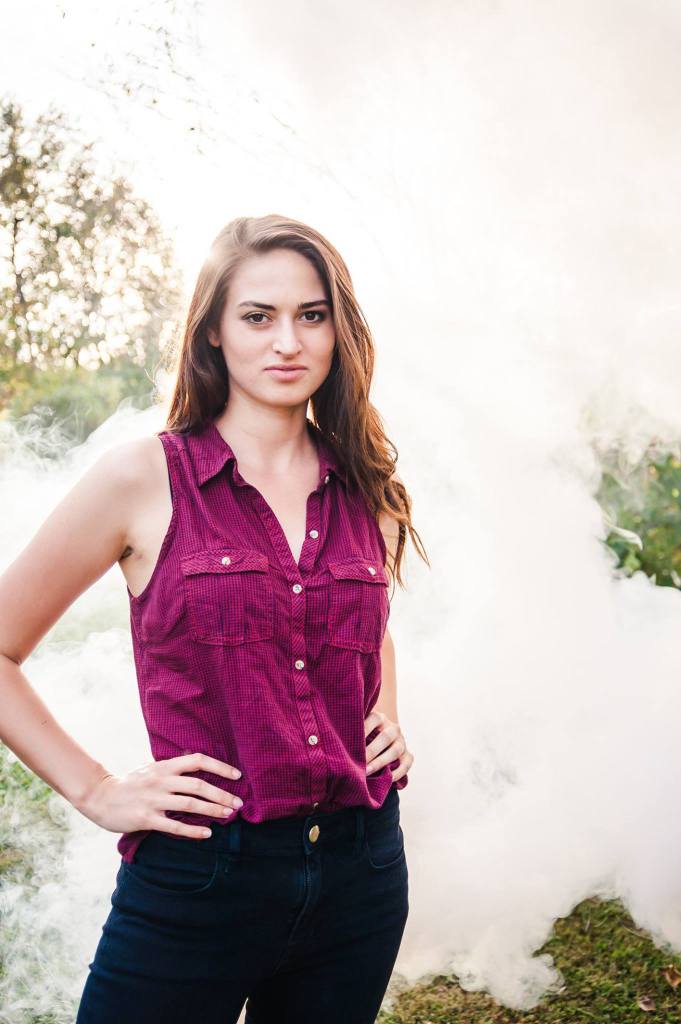
Hannah Bowman is a filmmaker based in Kentucky. She focuses on the topics of history, social justice, and marginalized communities.
 The playmaker